Commercial Driveway Jet Washing: Recycling and Sustainability Commitment
 Commercial driveway jet washing services today must balance powerful cleaning results with responsible waste handling. Our approach to commercial driveway pressure washing puts environmental protection at the centre of every job, from initial site assessment to final disposal. We design an eco-friendly waste disposal area on site to capture run-off, separate contaminants, and divert materials into reuse streams rather than sending them to landfill.
To achieve this we use a layered containment system: silt socks, portable interceptors, and temporary bunding to create a controlled sump area. Our crews are trained to operate a driveway jet cleaning service that prevents pollutants entering storm drains. Where oil or grease is present we employ oil-water separators and absorbent booms to isolate hydrocarbons for specialist recycling or licensed treatment.
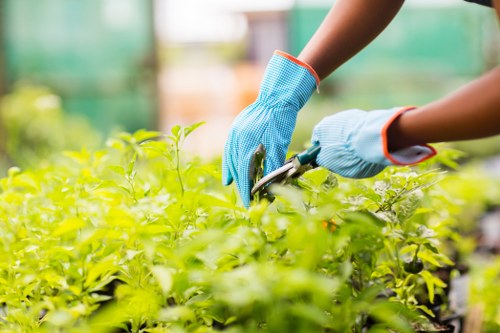
![A close-up view of a person wearing bright teal gardening gloves and black boots, trimming a small, dense shrub with variegated green and yellow leaves using pruning scissors in a well-maintained outdoor garden. The shrub is situated on a bed of bark mulch, with a background featuring a lawn area and other plants, indicating a landscaped backyard in a suburban setting. The scene is captured on a clear day, with natural sunlight illuminating the garden, highlighting the textures of the mulch, the green foliage, and the garden tools. The image emphasizes careful garden maintenance, suitable for professional gardening and landscaping services such as those offered by Commercial driveway jet washing, with a focus on sustainable and tidy outdoor space management relevant to the local area around [POSTCODE] and [TOWN].](/pub/_photos/gardening/f1384004168.jpg)
Recycling targets and measurable goals
We set a clear recycling percentage target: 75% diversion of solid and recyclable materials away from landfill within 12 months. This target covers recovered materials such as swept grit, bricks and pavers, metal fixings, plastics from packaging, and separated green waste. Tracking and reporting are standard on every commercial jet wash for driveways contract, with full job-level waste manifests to show how each material stream was handled.
Our sustainable rubbish gardening area is designed to give used landscaping materials a second life. Clean aggregate and salvaged paving can be stored in labelled bays for reuse on other sites or donated through partnerships. Organic materials from sweepings and green clearances are composted in a separate composting bay and used to enrich soil for community planting projects.
Local transfer stations and civic amenities
We work closely with local transfer stations and civic amenity sites to ensure legal, transparent disposal. Typical partners include municipal transfer facilities and regional transfer hubs such as the borough transfer station network and nearby civic recycling centres. These facilities accept segregated streams—soil, inert fill, mixed construction waste, metal and green waste—allowing us to maximise recycling and reduce haulage emissions.Many boroughs have adopted a strong approach to waste separation: kerbside sorting for glass, paper, plastics and food/organic waste, plus designated bulky waste collection routes. We replicate these best practices on site by sorting into clear streams right from the containment area, aligning our processes with the local council's recycling standards to make onward processing seamless.
![A gardening scene in an outdoor backyard area showcases a patch of dark, rich soil with a small silver trowel featuring a wooden handle embedded in the earth. Surrounding the planting bed are vibrant pink and white flowers, likely petunias, with lush green foliage. In the background, there is a black plastic seed tray placed on the soil, containing soil and a few small plants or seedlings. The garden appears well-maintained, with a colorful, flowering border that adds visual interest. The overall environment looks bright and sunny, indicating a clear weather day suitable for outdoor gardening activities. This scene reflects typical garden planting and maintenance practices linked to professional gardening and landscaping services, such as those provided by Commercial driveway jet washing, emphasizing soil preparation and flower bed planting in a residential or commercial outdoor space near the postcode area of [TOWN].](/pub/_photos/gardening/f1496984816.jpg) Partnerships with charities and community reuse are a core part of our sustainable model. Usable excess materials—bricks, planters, clean paving slabs, and reclaimed soil—are offered to community gardens, allotments, and social enterprises first. Longstanding collaboration with local charities (including ReStore-style outlets and community land trusts) ensures items suitable for reuse are diverted away from disposal and into programmes that benefit local residents.
Partnerships with charities and community reuse are a core part of our sustainable model. Usable excess materials—bricks, planters, clean paving slabs, and reclaimed soil—are offered to community gardens, allotments, and social enterprises first. Longstanding collaboration with local charities (including ReStore-style outlets and community land trusts) ensures items suitable for reuse are diverted away from disposal and into programmes that benefit local residents.
We maintain a donation log and coordinate collections by charity partners, documenting volumes and destinations. This not only supports local causes but also helps us hit our recycling percentage target faster and reduces the embodied carbon associated with producing new landscaping materials.
The sustainable rubbish gardening area also supports on-site biodiversity: reclaimed planters and compost enrich community planting beds, creating green corridors and improving urban soil health while giving forgotten materials a new purpose.

Low-carbon vans and logistics
Our fleet transition is well underway. We operate a mix of electric and hybrid low-carbon vans for driveway cleaning teams to minimise operational emissions. Route optimisation software reduces mileage and idle time, and consolidated trips to local transfer stations and charity drop-offs keep fuel use low. This low-emission approach complements our water and waste reduction practices across every driveway power washing service.
Every vehicle carries spill kits, labelled containment tubs, and portable filtration units so crews can manage waste responsibly on arrival, keeping the area safe and compliant with environmental regulations. We schedule EV charging during off-peak hours where possible to reduce grid carbon intensity.
Practical recycling activities on site
Typical recycling activity during a job includes:
- Segregation of grit and swept solids from recyclable metals and plastics
- Containment and treatment of contaminated water with oil separators
- Reuse of clean aggregates, salvaged paving and planters in the sustainable rubbish gardening area
- Composting of green waste and organic sweepings for community reuse
- Donation of reusable items via charity partners and municipal re-use hubs
We document each stream and provide manifests to demonstrate compliance with borough-level waste separation policies, aligning with local recycling calendars and transfer station requirements. Our aim is to be a replicable model for sustainable driveway jet washing for commercial sites that reduces environmental impact while supporting local circular economy initiatives.
In summary, our environmental program for commercial driveway jet washing blends robust on-site containment, a clear recycling percentage target, cooperative work with local transfer stations, active charity partnerships, and a low-carbon vehicle fleet. These elements create an integrated system that turns what used to be waste into resources—powering cleaner sites, greener neighbourhoods, and a lower-carbon future.
We are committed to continuous improvement: monitoring diversion rates, refining our sustainable rubbish gardening area, and expanding charity partnerships. The result is a professional, compliant, and socially responsible commercial driveway pressure washing service that delivers clean surfaces and measurable environmental benefits.
Adopting the boroughs' approach to waste separation, prioritising reuse and donating materials locally, and investing in low-emission logistics are the keys to sustainable driveway cleaning at scale.